116, 121

Pills and Pixels: Simplifying Medicine with Automated Prescription Filling

In a world where technology touches every aspect of our lives, it’s no surprise that even our pharmacies are getting a tech makeover. Enter Automated Prescription Filling—a game changer in the way pharmacies operate, making getting your medication faster, safer, and more reliable. Let’s break it down into simple terms and discover how this innovation is transforming the pharmacy as we know it.

Understanding the Automated Prescription Filling Process:


  • The Journey Begins: Streamlined Data Input

What Happens: The automated prescription filling process kicks off when a doctor sends a prescription electronically to the pharmacy, or a patient submits a physical prescription that the pharmacy staff then enters into the system. This digital entry marks the prescription’s first step into an intricate, highly efficient process.

The Impact: Consider the precision of digital communication systems, which virtually eliminate the errors common in manual transmissions. A report by the Center for Information Technology Leadership estimated that electronic prescribing systems could prevent up to 85% of medication errors. This initial step ensures that every detail, from the drug’s name to the dosage and frequency, is accurately captured in the pharmacy’s digital system.

  • The Safety Net: Integration with Medical Records

What Happens: Once the prescription is digitized, it’s automatically cross-referenced with the patient’s electronic health records (EHR). This step is crucial for identifying potential drug interactions, allergies, or other contraindications that could harm the patient.

The Impact: Imagine a scenario where a patient, let’s call her Emily, is allergic to a specific medication, but that detail might have been overlooked in a manual check. The automated system instantly flags this allergy, preventing a potentially dangerous situation. Studies have shown that integrating prescription systems with EHR can reduce adverse drug events significantly, making medication safer for patients like Emily.

The Heart of Automation: The Automated System Springs into Action

What Happens: Sophisticated algorithms then take over to validate the prescription against the patient’s medical history in real-time. This step checks for dosage accuracy, drug interactions, and adherence to treatment guidelines.

The Impact: It’s akin to a highly advanced, real-time data analysis system that can detect anomalies in vast datasets within seconds. Pharmacies report a drastic reduction in dispensing errors, with some noting a 70% decrease in mistakes, ensuring patients receive the right medication at the right dose.

Optimized Inventory Management

What Happens: The system automatically checks if the prescribed medication is in stock, managing the pharmacy’s inventory efficiently. If a drug is running low, the system can prompt reordering, ensuring that essential medications are always available.

The Impact: This is similar to just-in-time inventory practices used in manufacturing, which have been shown to reduce waste and increase efficiency. For pharmacies, this means improved service to patients, with medications readily available when they are needed, minimizing wait times and avoiding treatment delays.

Precision and Safety in Dispensing


What Happens: The automated dispensing technology accurately counts pills or measures liquids, ensuring that patients receive the exact dosage prescribed by their healthcare provider.

The Impact: Think of this precision like a highly skilled chef measuring ingredients to ensure the perfect flavor balance. In pharmacy terms, it translates to patients receiving the correct amount of medication, crucial for the efficacy of their treatment. Errors in dosage can lead to ineffective treatment or adverse reactions, but automation reduces this risk significantly.

Secure Packaging and Labeling

What Happens: Once the medication is dispensed, it’s securely packaged and labeled with the patient’s name, medication name, dosage instructions, and any necessary warnings.

The Impact: This meticulous approach is akin to the careful packaging of consumer electronics, where every component, from the device to the instruction manual, is clearly and securely packaged. In the pharmacy, such labeling ensures that patients understand how to take their medication correctly, enhancing safety and efficacy.

The Human Touch: Pharmacist Oversight

What Happens: Despite the advanced automation, a pharmacist conducts a final review of the prescription before it’s handed over to the patient. This step ensures that the automated processes have correctly interpreted and filled the prescription.

The Impact: This is comparable to a pilot manually checking the autopilot settings before takeoff. Even with the most advanced systems, human expertise is irreplaceable for ensuring safety and accuracy. Pharmacists bring a critical layer of oversight, using their knowledge and experience to catch any potential issues before they reach the patient.

    “Automation is cost-effective and provides a layer of predictability that can streamline processes and improve overall efficiency.” – Bill Gates

    Why It’s a Game Changer

    • Safety and Accuracy:  By minimizing human intervention, automated prescription filling significantly reduces the margin for error. This proactive approach enhances patient safety by virtually eliminating instances of incorrect dosage or medication mix-ups.
    • Efficiency: The streamlined workflow facilitated by automation expedites the prescription filling process. What once might have taken hours can now be accomplished within minutes, enhancing overall efficiency and convenience for both patients and pharmacy staff.
    • Pharmacist Availability: With the burden of routine tasks alleviated, pharmacists can redirect their focus towards providing personalized care to patients. This shift fosters deeper interactions, allowing pharmacists to address inquiries, offer medication counseling, and provide invaluable support tailored to individual needs. Ultimately, it cultivates a more patient-centric healthcare experience, where attention to detail and empathy reign supreme.

    Conclusion: The Future of Pharmacy

    The automated prescription filling process embodies the integration of technology and healthcare, aiming to improve patient outcomes, enhance safety, and streamline pharmacy operations. Through each step of this process, from initial data input to the final pharmacist check, automation plays a pivotal role in ensuring that patients receive the right medication, at the right time, in the right dose. This technological advancement not only represents a significant leap forward for pharmacies but also marks an evolution in the broader landscape of healthcare, where precision, efficiency, and patient safety are paramount.


    Comments Section:

    We’d love to hear your thoughts! How do you feel about the integration of technology in healthcare, specifically in pharmacies? Share your experiences or any concerns you might have below.

    Keywords:

    Automated Prescription Filling, Pharmacy Technology, Healthcare Innovation, Medication Safety, Pharmacy Efficiency

    Read More
    woman working in warehouse happy using tablet look scanning barcode for stock inventory check
    Logistics, Robot Process Automation

    Leverage Automation to Accelerate Logistics Processes, Reduce Costs, and Delight Customers

    Automation : The Secret Weapon for Logistics Optimization

    In the fiercely competitive realm of logistics, innovations that streamline operations, slash costs, and elevate customer satisfaction are invaluable. Enter Robotic Process Automation (RPA), a transformative force revolutionizing tasks with unmatched efficiency and accuracy. Through key use cases, we’ll explore how automation, powered by RPA, is not just a technological leap but a practical tool for real-world challenges, making logistics operations smoother, faster, and more reliable.

    Introduction

    In an era where efficiency defines success, the logistics industry has embraced automation as its champion. Imagine a digital workforce, tirelessly operating round-the-clock, tackling the most tedious tasks with precision. Automation, through RPA, is revolutionizing logistics by taking over routine tasks, freeing human workers to focus on more strategic endeavors. This post will delve into how automation is significantly enhancing logistics in core areas, underscored by vivid examples and compelling statistics.

    How Automation Makes a Difference in Logistics

    Automation isn’t just a buzzword; it’s a robust tool fighting the traditional challenges of logistics operations. From inventory management to order processing and invoice handling, the influence of automation is growing, yielding tangible benefits.

    Streamlining Inventory Management

    The Challenge:

    Inventory has to be monitored and maintained by manufacturers and suppliers in order to ensure that they have enough material to meet customer demands. Need to take real-time reports to optimize inventory needs.

    Two women working in warehouse using tablet look scanning barcode for stock inventory check

    Automation to the Rescue:

    • Automated Stock Updates: Continuous monitoring of stock levels ensures real-time updates, minimizing the risk of discrepancies.
    • Demand Forecasting: By analyzing past sales data to predict future demand, automation keeps inventory aligned with market needs.

    The Impact:

    Companies leveraging automation for inventory management report up to a 50% reduction in inventory-related tasks and a significant increase in accuracy, virtually eliminating stock issues.

    Efficient Order Processing:

    The Challenge:

    Order Processing is performed by manual entry of the customer information in companies’ database, processing payment, sending an email confirmation and placing order.

    Automation processes using RPA for logistics companies.RPA can streamline various tasks in logistics companies, such as order processing, inventory management, and shipment tracking. By automating these processes, companies can reduce errors, improve efficiency, and free up employees to focus on more strategic activities. Additionally, RPA can help logistics companies adapt to changing market demands and scale their operations more easily. Overall, implementing RPA in logistics can lead to cost savings, faster delivery times, and increased customer satisfaction.

    Automation to the Rescue:

    • Quick Data Entry: Automation dramatically shortens order processing times by swiftly entering order details into systems.
    • Seamless Coordination: Digital workers optimize order fulfillment by assigning orders to the most suitable warehouse and arranging shipping, streamlining the process.

    The Impact:

    Organizations using automation report order processing times cut by up to 70%, significantly boosting customer satisfaction and reducing logistical bottlenecks.

    Automating Invoice Processing

    The Challenge:

    One of the major challenges for businesses is getting paid after the job is done. The regular follow-ups and multiple systems in the process can make it slower. RPA can integrate multiple systems to streamline the process. RPA can integrate with freight bill payment systems to automate complete order-to-cash process for hundreds of large 3PL carriers.

    A woman is sitting at a desk, typing on a computer, efficiently managing the invoice processing for logistics
    A woman is sitting at a desk, typing on a computer, efficiently managing the invoice processing for logistics

    Automation to the Rescue:

    • Instant Invoice Creation and Sending: Automation allows for the automatic generation and dispatching of invoices, significantly reducing delays.
    • Quick Reconciliation: Bots efficiently match invoices against purchase orders with minimal human intervention, swiftly identifying discrepancies.

    The Impact:

    Invoice processing automation has enabled companies to reduce costs by up to 60% and cut processing times by 75%, boosting efficiency and improving vendor relations.

    “Embrace automation to transform logistical challenges into opportunities for efficiency and growth, setting a new standard for innovation and customer satisfaction in the industry.”

    The 24/7 Advantage

    Imagine operations running seamlessly 24/7, without constant human oversight. Automation makes this possible, working tirelessly to ensure uninterrupted workflow and quick adaptation to market changes.

    Wrapping Up: The Simple Truth About Automation

    Automation, underpinned by RPA, is revolutionizing the logistics industry by taking on tedious tasks, allowing humans to focus on problem-solving and innovation. As we progress, automation stands as a testament to faster, cost-effective, and more reliable logistics operations.

    The Future Is Automated

    The logistics sector is entering a new era marked by automation, driving efficiency, innovation, and growth. The evolving capabilities of automation in logistics forecast a future of more efficient, accurate, and resilient operations, adaptable to changing market dynamics. Integrating automation into logistical processes prepares companies not just for today’s challenges but for tomorrow’s opportunities.

    Navigating Challenges with Automation: Beyond the Basics

    As businesses explore the depths of automation’s potential, they find it capable of addressing complex challenges. Beyond basic tasks, automation is pivotal in enhancing data analysis, optimizing route planning, and managing customer inquiries, signifying its growing influence and shaping the future of logistics in exciting ways.


    Read More
    116, 127

    How Automation is Making Inventory Management an Efficient Yet Effortless Process

    Inventory management forms the heart of all the manufacturing and allied activities – procuring the raw material, converting it into the final offering by the firm, determining optimum stock levels, and reorder quantities. The optimum level of inventory, at a given point, avoids under- and over-investment of funds and resources. An efficient inventory management system is crucial to saving firms from stock-shocks and losing customers.

    Role of RPA in Inventory Management

    Inventory management includes a series of repetitive tasks across various departments with a mostly transactional nature. Automating, with better coordination among the various departments, reduces redundancy, duplication of work and saves time and effort.

    With automation of inventory management, oversights in determining optimum reorder levels, quantities, and delays are eliminated. An automatic system continuously monitors the stock levels, provides day-to-day data on usage rates of various stock items, notifies, and orders when the levels go below the safety-mark.

    It analyzes the average daily consumption of raw-materials and adjusts the reorder levels according to the market demand. It determines an optimum stock level by regularly calculating turnover ratios and time period.

    Increased levels of transparency help the organization to rectify the stock levels at any time and evaluate present requirements. It is a stable system that gets updated continuously which makes it simpler and easier for the organizations to absorb market shocks and adapt to a dynamic external working environment.

    How Inventory Automation benefits SMEs?

    For SMEs, with limited free funds, an over-investment in inventory results in a huge opportunity cost as well as carrying and holding costs of the excessive stock. An under-investment, on the other hand, can distort the entire manufacturing process thereby not catching up with the market demand and ultimately losing its customers.

    The SMEs, in their growth phase, manually maintaining and monitoring an increasing data on sales, finished goods, WIPs, raw materials, parts, and components, etc. is not an easy task, it more than often results in inaccuracies and mismanagement.

    Integrating the inventory management automation system with the firm’s EPR eliminates the need for manual recording and stock-taking by developing a separate database for each of the stock and produce and updating the change in their levels as and when it happens.

    How does it work?

    It develops and maintains databases for different departments. The automation system keeps accessing the databases of different departments – sales, purchase, production- modifying the re-stocking levels according to the needs of the departments.

    Once the stock levels are reduced below the threshold, the automation system kicks in the procurement process. It generates requirement details, sends it to the concerned department for approval, places the order for purchase, collects the invoice from the vendor, and updates the payables account.

    The automation system, while ordering the stock, goes through and analyzes all the options available to the firm and identifies the lowest price at which the inventories can be re-ordered. It keeps on evaluating the various lag-periods to determine the time duration that is most cost-effective for re-ordering.

    Market research shows firms that have adopted the automation system have effectively reduced their inventory processing time. The time taken for completion of each operating cycle is down by 20% and the entire inventory processing time has been reduced by 70-72%. It also reports, these firms have nearly zeroed the losses incurred due to delays and discrepancies in reorders. The firms with automation have reported zero line stoppages.

    An automated inventory management system makes the firm more efficient and organized. Here is how it does it.
    Eliminating Mundane Manual tasks:

    The process of inventory involves many mundane manual tasks including stock-taking, making purchase orders, updating data on raw materials, finished goods, spare parts, etc., which are prone to human errors The automated system takes over these tasks, executes without any inaccuracies, and on time, and releases much of the human resource blocked in the process.

    Efficient coordination:

    The process requires a lot of external and internal communication and coordination. The system is integrated with the operating system of the firm, it coordinates the demand and requirement for various inventories at various production and sales levels. Automation, also, communicates with the vendor, supplier, and end customers, resolve their queries instantaneously, and collects feedback.

    Cost-effectiveness:

    Since automation is able to determine an exact stock level required to keep the business functional, it reduces over-stocking thereby cutting down on the warehousing and holding or carrying costs of the inventories. It also avoids under-stocking and hence, zero or negligible costs are incurred in terms of customer or goodwill loss.

    Selecting the right seller:

    An automation system thoroughly analyzes the various alternatives available to the firm and picks the seller that asks for the least price. It lists the vendors, gets quotations, matches the offering to the requirements of the firm, checks for hidden costs, if any, and selects the right seller to place the order.

    Read More
    Optimized-business-casual-manager-presenting-and-discussing-6XEMB6C
    Robot Process Automation, Uncategorized

    Why Accounts Payable Automation a key game changer to the success of Mid-Size Businesses?

    The current tools required to optimize and automate Accounts Payable (AP) are designed to accommodate the objectives and challenges of larger enterprises. As a result, small to mid-sized enterprises, with annual revenue ranging from $1 Million to $100 Million, are left with limited options. They are more than often reduced to patching together a series of disparate tools, to address the issue. These strategies have limited advantages. Primarily companies use a method to minimize the data entry job to a single pain point.

    Managing Accounts Payable (AP) is a costly and tedious process that requires accuracy and regularity. The Automation of Account Payables provides for a simple yet effective way to manage the AP while cutting down on back-office costs and manual errors.

    The real advantages of a completely integrated and controlled AP system, though, go far beyond an optimal data entry system. AP Automation guarantees rigorous supervision, simpler authorizations, strategic transfers, and access to transactional data in real-time. Thus, financial practitioners will take quick and optimal decisions for the bottom line of their company.

    With the present-day advancements, automation technology has caught up to the specific needs of SMEs. They are no longer deprived of the advantages of an efficient and mature AP state. Robust AP technologies and systems to serve the needs of a mid-size business are now available. They also provide efficiency gains and control enhancement functionality to optimize the results.

    Mid-sized firms already enjoying the benefits of AP Automation

    Some have just entered this sphere while some others are still stuck with erroneous and expensive manual processes. However, given the advantages and effectiveness of the automating solutions more and more firms are steadily integrating these solutions in their daily operations ERP (Enterprise Resource Planning).

    Front Runners

    Many firms have digitized the maximum proportions of their invoices. These are the front-runners in AP Automation management. They use cloud-based automation solutions that ensure accuracy in financial statements, reduction in fraudulence and embezzlements, freedom from manual errors, and cost-efficiency.

    Followers

    Next comes the followers, these firms have done partial digitization of the invoices and continue to have a decent percentage of paper invoices as well. Such organizations do not have a well structured and functional automated AP workflow. At most, they have adopted elementary automating solutions such as an invoice registering tool, e-payment tools, etc..

    Beginners

    There are, still, some firms that are purely manual-labor intensive and have little or no automation. They are dependent on human-driven processes to manage their AP. These are the beginners and they undertake massive paperwork, manual entry of invoices, and book-keeping. Such firms are prone to human error and bias at multiple levels and processes. Fraudulence, an error of omissions and commissions, delay in payments, and distorted recording to the accounts payable is also seen

    The manual recording and discharging of accounts payable result in discrepancies with the supplier’s and vendors’ portfolios, delays in payments, and lower early-payment discount benefits.

    Current Scenario

    While the front-runners can reap the maximum benefits of the AP automation, the followers avail lesser benefits and aren’t as efficient as the firms which have completely automated the process of AP management. The beginners are yet to start benefiting from the automation technology and are still struggling with the drawbacks of manual AP management processes.

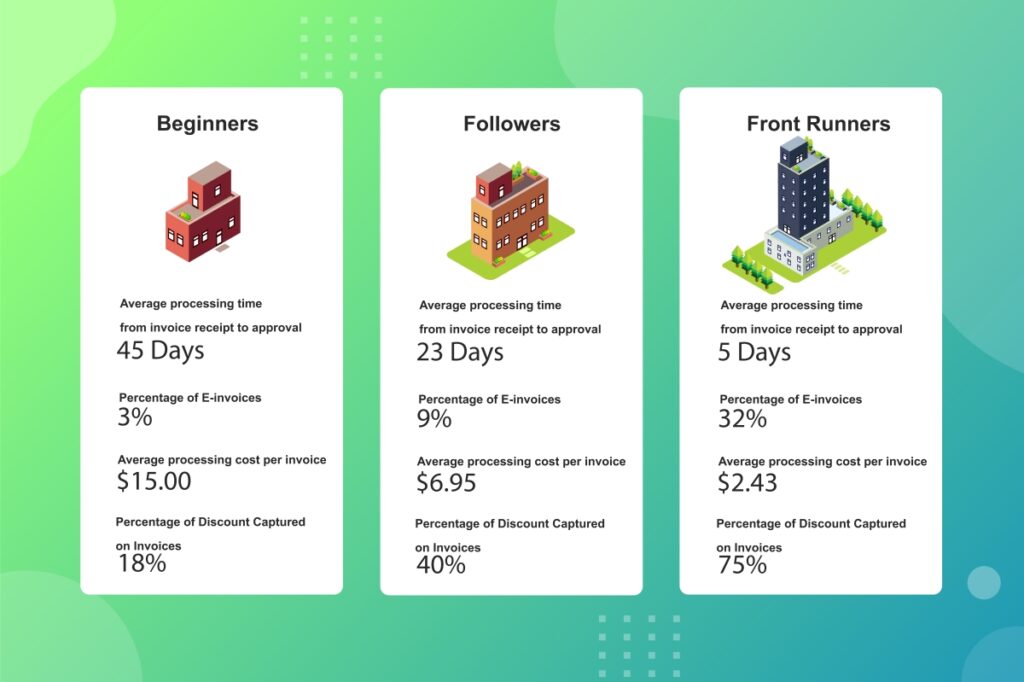
    Recent market analysis shows that 42 % of the SMEs are still at the Beginner’s level in terms of AP automation while less than 10% makes it to the Front-Runner’s level. It has been observed, the overall cost of managing the accounts payable reduces concerning the increase in the automation levels of its management. (Figure 1)

    Figure 1. Shows the statistical difference between beginners, followers, and front runners.

    How to make a high-rewarding investment in AP automation?

    The investment in automation technology, like any other, is made post-measuring a bankable ROI. It involves strategic-level decision making. An assured high-percentage return on investment is crucial for Small and Medium-sized businesses as they have fewer resources and small-irregular inflows of investment. It becomes a key issue for SMEs to analyze and invest in the most rewarding automation technology avenues.

    Here is a detailed check-list for SMEs on what to look, while investing in an AP automation system :

    Compatibility with the existing ERP

    The operations and administrations of SMEs are mostly inter-woven in a well-developed Enterprise Resource Planning System. AP management is also an integrated part of this system. The new AP automation technology should be compatible with the existing EPR system and should complement its working. A complete revamping and re-organizing of existing workflow would disrupt the financial and functional soundness of the SMEs. Hence, while evaluating various alternatives, an SME should look for EPR compatibility and integrating features of the AP automation technology.

    Establishing an analyzed business case for the adoption of AP automation

    Before adopting the AP automation management system, the firm should assess the current position of their payable levels. the current cost incurred in the entire AP management process, and the time consumed should also be considered. This helps SMEs in deciding the end objective of adopting AP automation. Increased visibility, reduced back-office costs, and elimination of manual errors are some of the benefits of AP automation that make a strong case for its adoption.

    A ‘firm-friendly’ solution provider

    The SMEs investing in AP automation solutions should be cautious while choosing a solution provider. Many solution providers offer AP automation services. A firm should go for a solution provider who ensures a tailor-made option. It should be customized to fulfill the requirements of the firm and takes into account all its limitations. Few of them are size, space, turnover, existing technical infrastructure, and feasibility. SMEs should look for service providers who provide ‘firm-friendly’ automation solutions after assessing the internal and external environment in which the firm operates.

    For the efficient and smooth running of the businesses, automation of repetitive and regular tasks is a must. This helps firms to reduce huge costs in terms of resources, monetary, human, and time. Hence, a necessity to survive the competition. Management of Accounts Payable is one such task, making it’s automation highly recommended.

    Read More
    Artificial Intelligence

    What is RPA and How Can You Improve Your Business’s Accounting Efficiency.

    As companies continue to search for cost-effective solutions to increase performance, Robotic Process Automation ( RPA) becomes one of the most prominent breakthroughs. According to a new study by Deloitte, 53% of the companies surveyed already have incorporated or started to integrate robotic process automation into their invoice management approach. This is anticipated to accelerate to a universal implementation within the next five years.

    Robotic Process Automation is robot technology that can complement people to simplify the routine, rule-based, and operating procedures. By communicating with current IT systems, RPA software is capable of obtaining and evaluating those tasks and then automating them continuously. Introducing a digital workforce in place, employees would also be able to devote more time to the client and other higher priority activities.


    What is RPA?

    Robotic Process Automation ( RPA) is considered to be the technique for mechanization of company processes by automation to minimize human interference.

    If each of these words must be sorted out one by one, Robotics are entities that imitate human activity. A process consists of a series of steps leading to productive work. For instance, making your favorite beverage or dish, etc. Automation is any robotic action that does not require human interaction. If we sum up all these concepts, it is also known as Robotic Process Automation. It imitates human behavior to execute a series of steps leading to concrete action without any human interference.


    RPA boosting your business’s operating efficiency

    Since the Payable Accounts (AP) are critical for the competitiveness and financial results of the business entity, AP procedures are manual and time-intensive for many North American organizations. Leading companies are adopting software techniques to boost AP performance, adding to reduce departmental expenses and growing profits within the enterprise. Technology helps AP agencies to retain a solid bottom line for their support. Large organizations with broader financial and technical capabilities have historically powered AP automation, but today automation is adopted in back offices by businesses of all sizes.


    AP challenges faced by organizations without a proper RPA solution

    Organizations strive to maintain an effective invoice mechanism without the correct AP technologies.

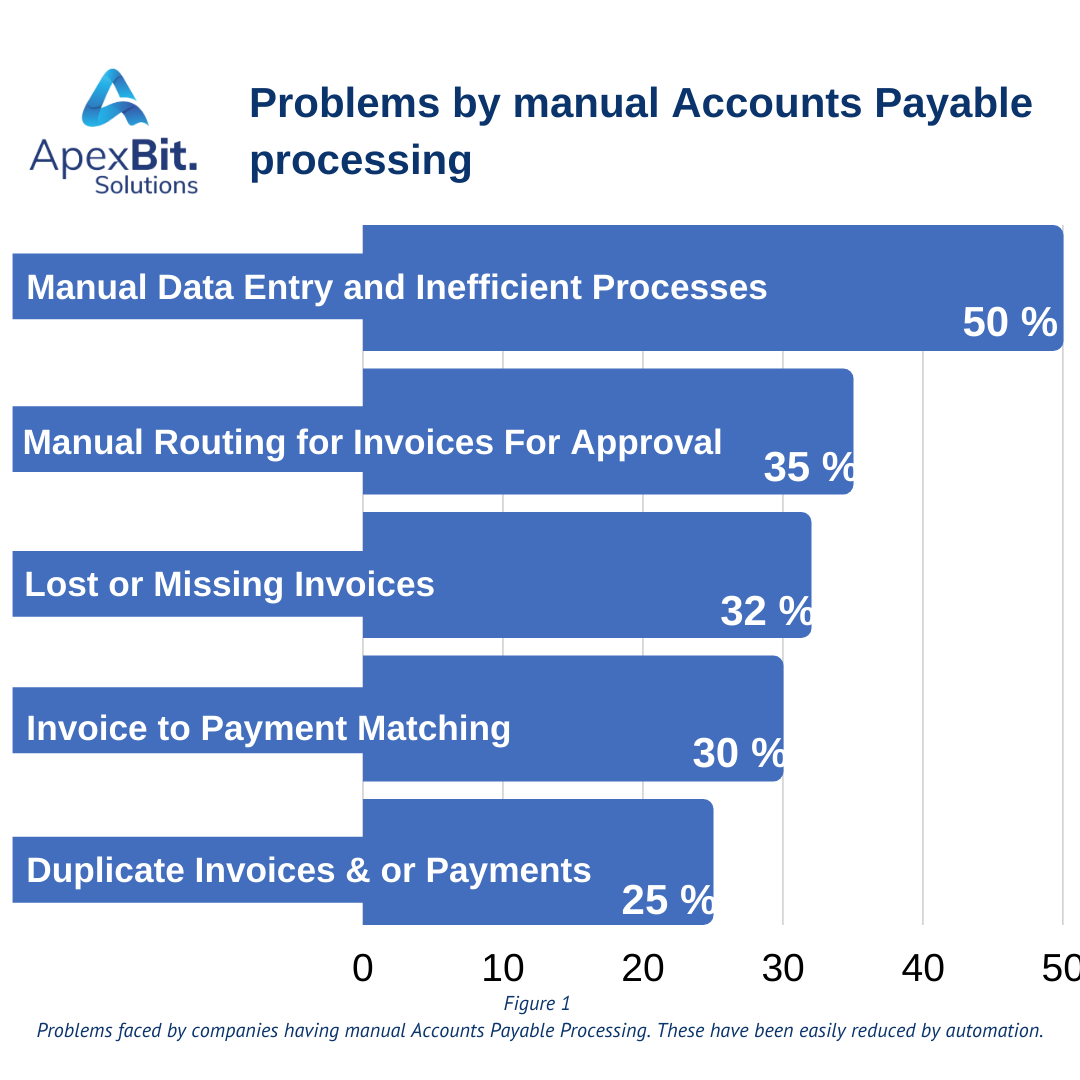
    Figure 1 depicts the leading organizational challenges :

    • Unproductive procedures and manual data entry.
    • Manual transfer of invoices for authorizations.
    • Constantly losing or missing invoices.
    • Major receipts of invoices being in paper format.

    In their own words, the companies cited several difficulties when asked to identify their most significant AP problems. They referred to the handling of obsolete, outdated AP applications with entirely manual AP units. Many have used an ERP or an invoicing control program for their applications for the manual submission of invoices information. Many have been criticizing their applications. One respondent who uses an ERP tool also described its AP Department as “paper-intensive” despite the AP program, which was focused on its tool creating the “no constant method of obtaining and authorizing invoices.” Others found ERP based instruments “unsatisfactory” and “glitchy.”


    Benefits of using an RPA for your Accounts Payable

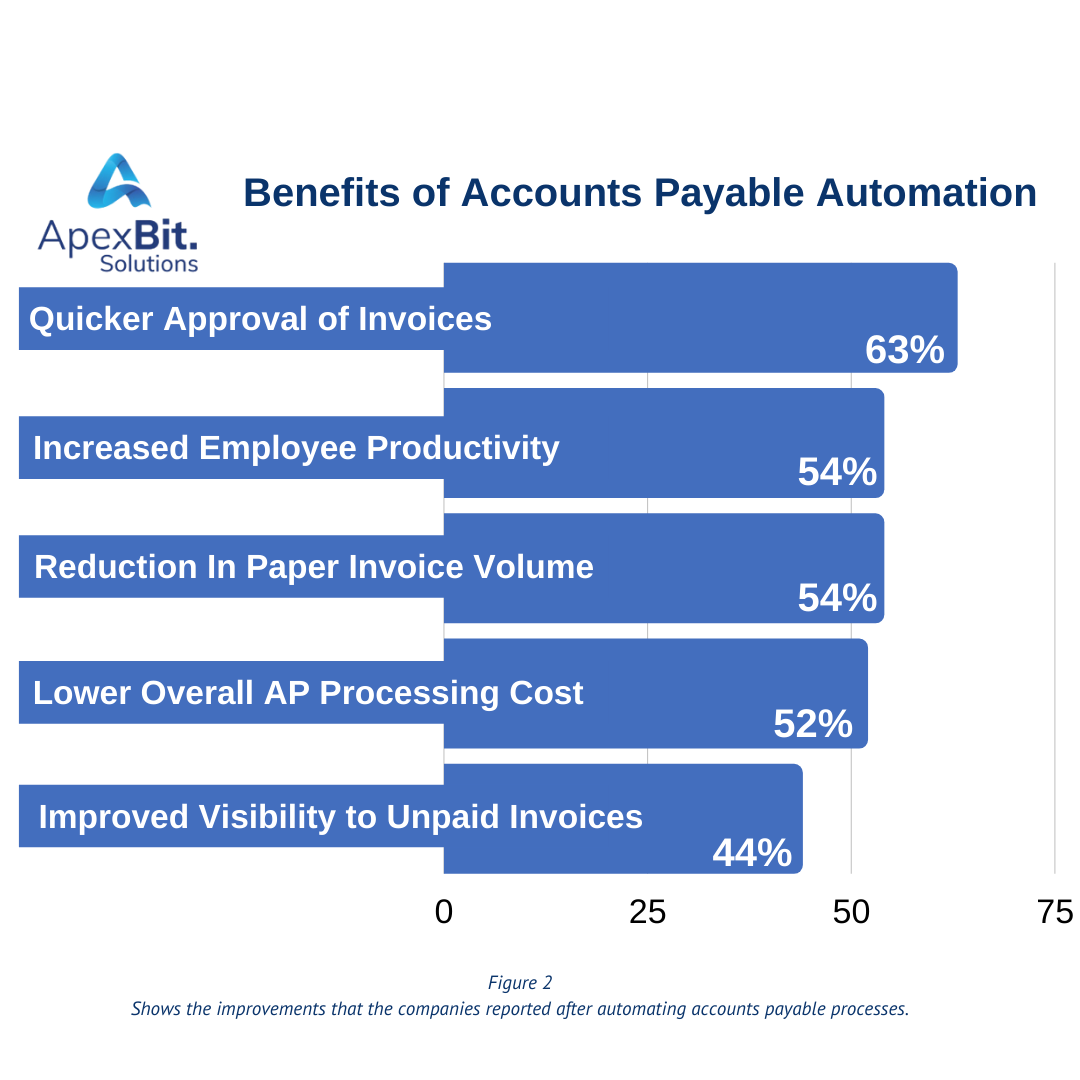
    Automation of AP tackles a variety of limitations in the AP Division. Figure 2 shows that many businesses can increase approval periods by using AP automation, to improve the productivity of workers.

    It points out the major organizational and strategic benefits :

    • Improving supplier relationships
    • Simplifying the auditing process
    • Reducing fraud and duplicate payments
    • Overall resulting in lower AP costs
    Organizations have recognized the beneficial effects and see automation technology as an ability to transform and improve their AP systems technologically and functionally.


    Read More